
 See Our Latest Article on HelloNation

Jaw pain can sometimes occur alongside neck stiffness, headaches, shoulder tension, or changes in posture. The connection is real enough to deserve attention, but it is more complicated than saying that a “misaligned spine” causes every jaw problem.
For residents of Orangetown, NY, the practical question is usually this: Could the neck be contributing to jaw discomfort, and what symptoms suggest that the problem needs medical or dental evaluation?
What is the connection between the jaw and spinal health?
The jaw and upper spine are linked through shared muscles, nerves, movement patterns, and the body’s system for maintaining head position. The jaw joint, called the temporomandibular joint, sits close to the ear and works with the muscles of the face, neck, and upper shoulders.
When someone clenches the teeth, holds the head forward, or keeps the shoulders tense, the chewing and neck muscles may work harder than usual. This can contribute to overlapping symptoms such as:
- Jaw soreness or fatigue
- Neck stiffness
- Pain around the temples or forehead
- Headaches
- Shoulder tightness
- Reduced ability to open the mouth comfortably
Research supports an association between temporomandibular disorders and neck-related problems, including reduced neck movement, lower endurance of certain neck muscles, and greater self-reported neck disability. However, research does not prove that poor posture or a spinal position is the sole cause of jaw pain. ([pubmed.ncbi.nlm.nih.gov](https://pubmed.ncbi.nlm.nih.gov/33218570/?utm_source=openai))
Does poor posture cause jaw pain?
Poor posture may be one contributing factor, but it is not a complete explanation. Studies examining head and neck posture in people with temporomandibular disorders have produced mixed results, and some reviews describe the relationship as uncertain. ([pubmed.ncbi.nlm.nih.gov](https://pubmed.ncbi.nlm.nih.gov/24118029/?utm_source=openai))
A forward-head position can change how the muscles around the jaw, throat, neck, and upper back coordinate movement. For example, a person who spends long periods looking down at a phone, laptop, or craft project may unconsciously tighten the jaw and lift the shoulders. That pattern can aggravate symptoms in someone who is already clenching or experiencing irritation in the jaw joint.
Still, posture should not be treated as a simple diagnosis. A person can have rounded shoulders without jaw pain, while another person with an upright posture may have a disc problem, arthritis, dental issue, or muscle disorder affecting the jaw.
What are temporomandibular disorders?
Temporomandibular disorders, or TMDs, are a group of conditions affecting the jaw joints, chewing muscles, and related tissues. The National Institute of Dental and Craniofacial Research identifies more than 30 possible conditions within this broad category. ([nidcr.nih.gov](https://www.nidcr.nih.gov/health-info/tmd?utm_source=openai))
Symptoms may include:
- Pain in the jaw joint or chewing muscles
- Pain spreading toward the face or neck
- Jaw stiffness or limited movement
- Locking of the jaw
- Painful clicking, popping, or grinding
- A change in how the upper and lower teeth meet
- Headaches, ear symptoms, or facial tenderness
A painless click does not necessarily indicate damage. Jaw sounds without pain are common and often do not require treatment. Pain, locking, reduced movement, or a sudden change in the bite deserves more attention. ([nidcr.nih.gov](https://www.nidcr.nih.gov/health-info/tmd?utm_source=openai))
How might the neck contribute to jaw symptoms?
The upper neck and jaw frequently move as part of the same activity. Chewing, speaking, swallowing, yawning, and turning the head require coordinated work among several muscle groups.
Neck-related factors that may accompany jaw pain include:
- Limited rotation or stiffness in the upper neck
- Muscle fatigue after prolonged desk or screen use
- Sleeping in a position that strains the neck
- Repetitive lifting or household work
- Stress-related shoulder elevation and tooth clenching
- A history of whiplash or another head-and-neck injury
This does not mean that treating the neck will automatically resolve a jaw disorder. It means that a careful evaluation may need to consider both areas rather than focusing only on the painful spot.
Seasonal routines can also affect symptoms. During colder months, people may spend more time indoors, sit for longer periods, or tense the jaw and shoulders against cold temperatures. Snow removal, home maintenance, and prolonged driving can place additional demand on the neck and upper back. These factors may amplify existing muscle tension without being the original cause of a TMD.
Can chiropractic care help jaw-related neck tension?
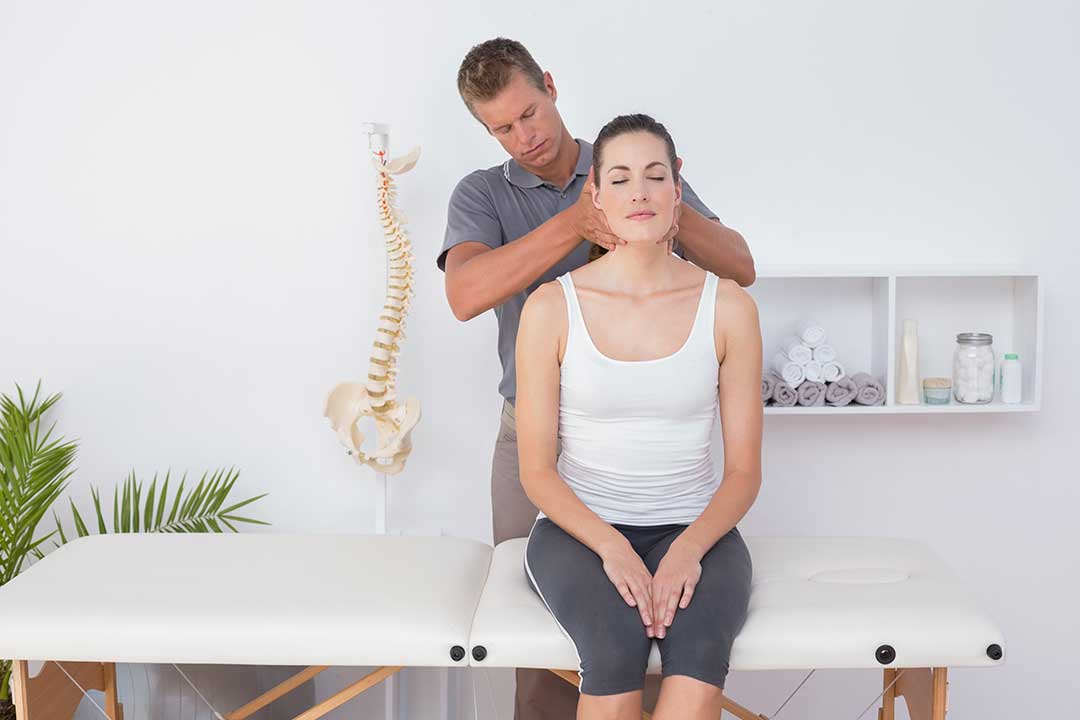
A spinal or musculoskeletal assessment may be useful when jaw discomfort occurs with neck pain, restricted movement, or upper-back tension. Conservative care may focus on movement, muscle tension, ergonomic habits, breathing, and ways to reduce unnecessary clenching.
The evidence does not support assuming that spinal manipulation is a universal treatment for TMD. Because jaw disorders have different causes, care should be matched to the findings. Dental, medical, physical therapy, behavioral, and self-management approaches may each have a role depending on the symptoms.
The NIDCR recommends beginning with conservative measures for many TMD problems, such as softer foods for a short period, heat or cold, gentle exercises when appropriate, reducing gum chewing and nail biting, and short-term over-the-counter medication when medically safe. It also advises caution with treatments that permanently change the bite or jaw joint. ([nidcr.nih.gov](https://www.nidcr.nih.gov/health-info/tmd?utm_source=openai))
What can a person try safely at home?
For mild, recent discomfort, practical steps may include:
- Keep the teeth slightly apart when not eating; the lips can rest together while the jaw remains relaxed.
- Temporarily choose foods that require less chewing.
- Avoid gum, chewy candy, nail biting, and deliberately testing a painful click.
- Use a comfortable warm or cool compress, depending on which feels better.
- Take regular movement breaks during screen work.
- Position screens near eye level rather than repeatedly bending the neck downward.
- Practice slow nasal breathing and relaxed shoulder positioning.
- Avoid forceful jaw stretching or aggressive self-manipulation.
Medication is not appropriate for everyone. People with kidney disease, ulcers, blood-thinning medication, allergies, pregnancy, or other medical conditions should check with a qualified medical professional before using anti-inflammatory drugs.
When should jaw pain be evaluated?
Persistent, worsening, or recurrent symptoms should be assessed rather than attributed automatically to posture. A dentist or physician can help determine whether the source is a TMD, tooth problem, ear condition, sinus issue, nerve pain, injury, arthritis, or another disorder.
Prompt evaluation is especially appropriate when the jaw:
- Cannot open or close normally
- Locks repeatedly
- Has sudden swelling, fever, or significant tenderness
- Becomes painful after trauma
- Develops a sudden bite change
- Causes severe or escalating pain
Jaw discomfort accompanied by chest pressure, shortness of breath, sweating, nausea, faintness, or pain spreading into the arm or neck can signal a medical emergency rather than a musculoskeletal problem. Emergency services should be used in that situation.
The most useful approach is to treat the jaw and spine as related but distinct parts of the body. Looking at movement, muscle tension, daily habits, dental health, stress, and injury history together gives a more accurate picture than blaming the spine—or the jaw—for every symptom.
